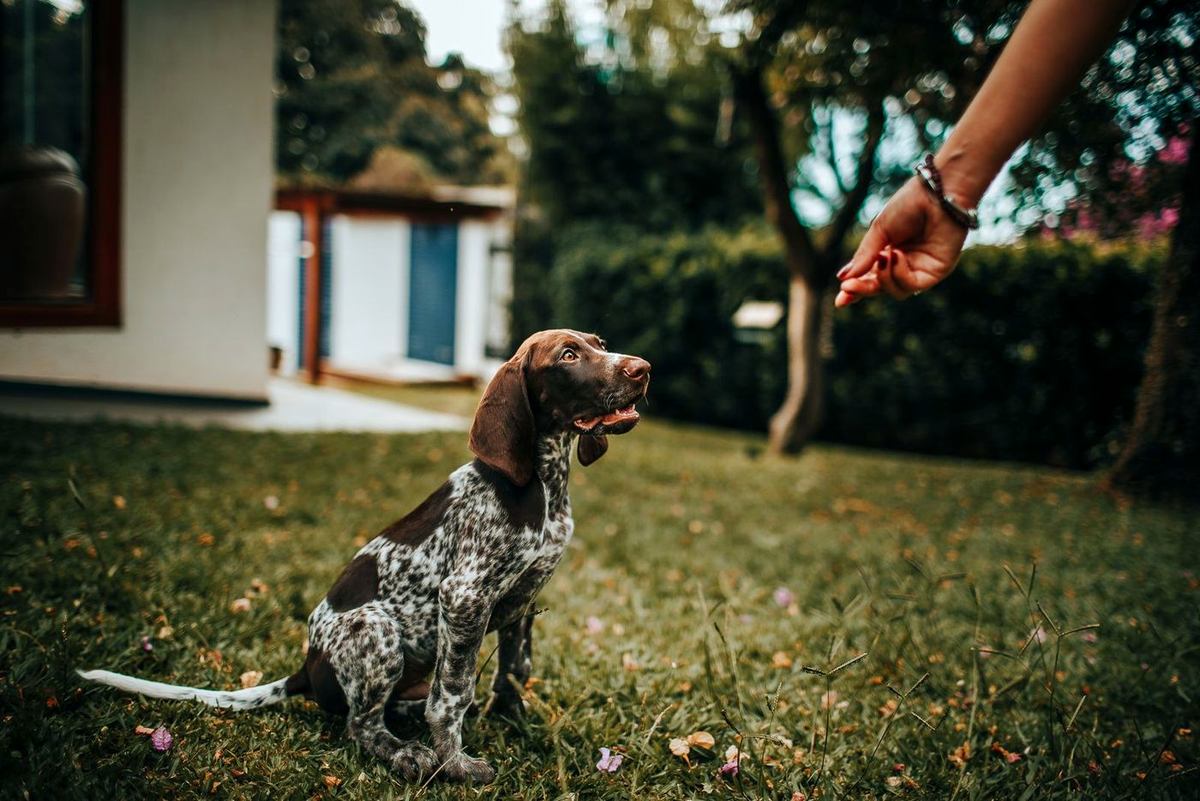
Pulling is the top complaint on Summerville sidewalks, where squirrels, joggers and other dogs appear without warning. On the quiet blocks around Azalea Park a strong dog can tow an owner across the grass, and at Colonial Dorchester State Historic Site the six-foot leash rule leaves little slack for a lunging dog. In Ladson, trucks on US 78 make a pulling dog a safety risk at the curb. Ridgeville dogs sometimes pull toward gates and open fields.
The trainer teaches a comfortable bubble at the end of the lead in five stages: an indoor follow-me game, a driveway drill that rewards a slack lead and resets on any pull, a neighborhood loop, park proofing and a homework drill with a short video. Leash-Lite takes 7 days, Urban Walkers 14 and Trail Trekkers 21. Where a dog needs a clearer signal, low-level cues may be added only after the dog learns what they mean.
You practice alongside the trainer so the timing becomes yours, learning when to stop, when to reward and how to change direction calmly. Homework is a short daily drill, with progress updates and a short video when time allows. Rabies and Bordetella vaccinations and flea prevention must be current before the first lesson. The linked trainer evaluates how your dog pulls and picks the track that fits your streets and your dog.
What stopping pulling usually covers
- Rewarding a slack lead at every step, so the dog learns that staying near you pays.
- Resetting the walk when the leash goes tight, which removes the reward for towing.
- Choosing a leash track that matches your routine, from short sidewalk loops to longer trail outings.
- Proofing near squirrels, bikes and traffic, adding each distraction only after the last one is easy.
- Checking the gear you use, since the right fit and a simple flat collar or harness help the process.
Towns in this guide. Around Dorchester and Berkeley counties.
Compare other programs. Find your fit.
How this guide works
Facts read first. Limits stated.
Operated by K9PN. Read the Disclaimer for details.
Good questions
Before you begin.
Why does my dog pull so hard on walks?
Pulling usually works: the dog gets to the smell or squirrel faster, so it repeats the habit. Training makes slack leads earn forward movement and tight leads earn a pause.
How long does it take to stop pulling?
Leash-Lite runs about 7 days, Urban Walkers about 14 and Trail Trekkers about 21. Progress depends on the dog and on how much you practice at home each day. Daily practice helps.
Will pulling be harder at Colonial Dorchester State Historic Site?
It can be, since the leash must be six feet or shorter and the setting is full of smells. Practice on quiet streets first, then build toward the park one step at a time.
Can I fix a big dog's pulling myself?
Many owners can make progress with coaching. The linked trainer teaches the timing and shows you how to practice, so the changes carry over to your own walks around the neighborhood.